This crochet collection is inspired by readings and conversations in my graduate level class on literary journalism and ecocriticism. ENGL5V78 “Beyond Nature Writing: Literary Journalism and Ecocriticism” was taught by Dr. Rob Alexander in the Department of English Language and Literature. I was eager to take this class, as I see many overlaps between literary journalism and podcasting. The readings for the course pushed me in a direction I wouldn’t normally have gone with my reading, which I consider one of the hallmarks of an exciting course!
We started with Rachel Carson’s Silent Spring, John Valliant’s The Tiger, and Rob Nixon’s Slow Violence. We contemplated hyperobjects like climate change and radiation in Timothy Morten’s Hyperobjects and transcorporeal ecocriticism with Stacey Alaimo’s Bodily Natures. Svetlana Alexievich’s Chernobyl Prayer will continue to haunt me, and I’ve already added her other books to my TBR list. Ana Tsing’s reflective and thought-provoking assemblage on the matsutake mushroom in The Mushroom at the End of the World: On the Possibility of Life in Capitalist Ruin challenged ideas of how to tell a story. We concluded with Joe Sacco’s Paying the Land, a truly riveting graphic report on the complex interconnections between people, land, and resources.
I have learned so much from my very smart classmates. I’m grateful for their warm welcome, lively conversation, and camaraderie!
I started crocheting these in February, during what has been an unexpectedly stressful period of my life. It all started with a picture of Coalie and thinking “hmmm, I wonder if I could make that…”
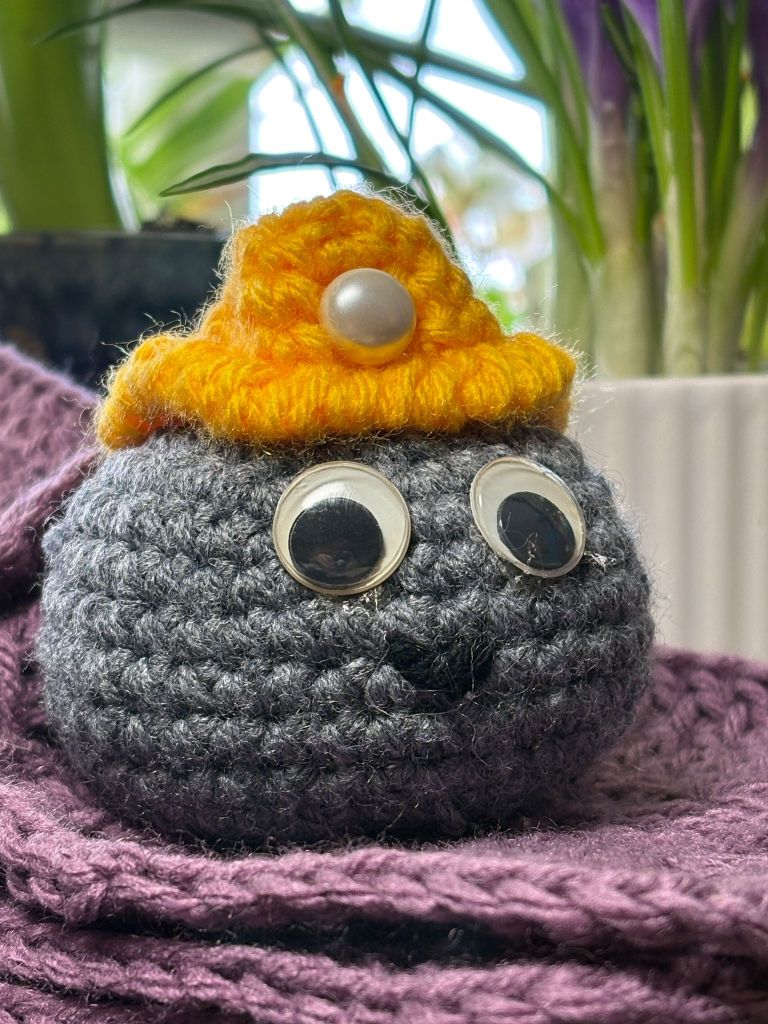
Coalie
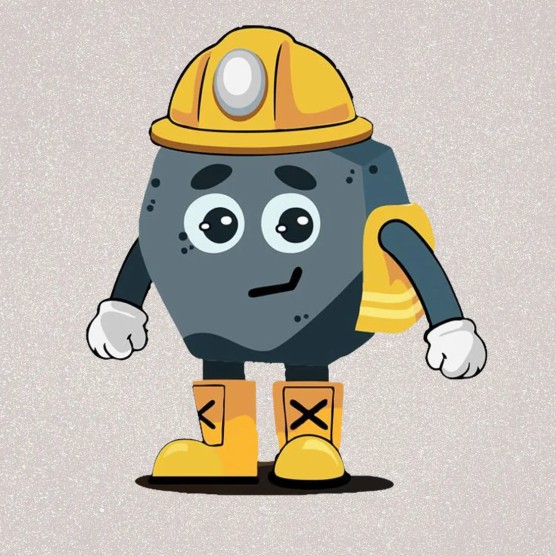
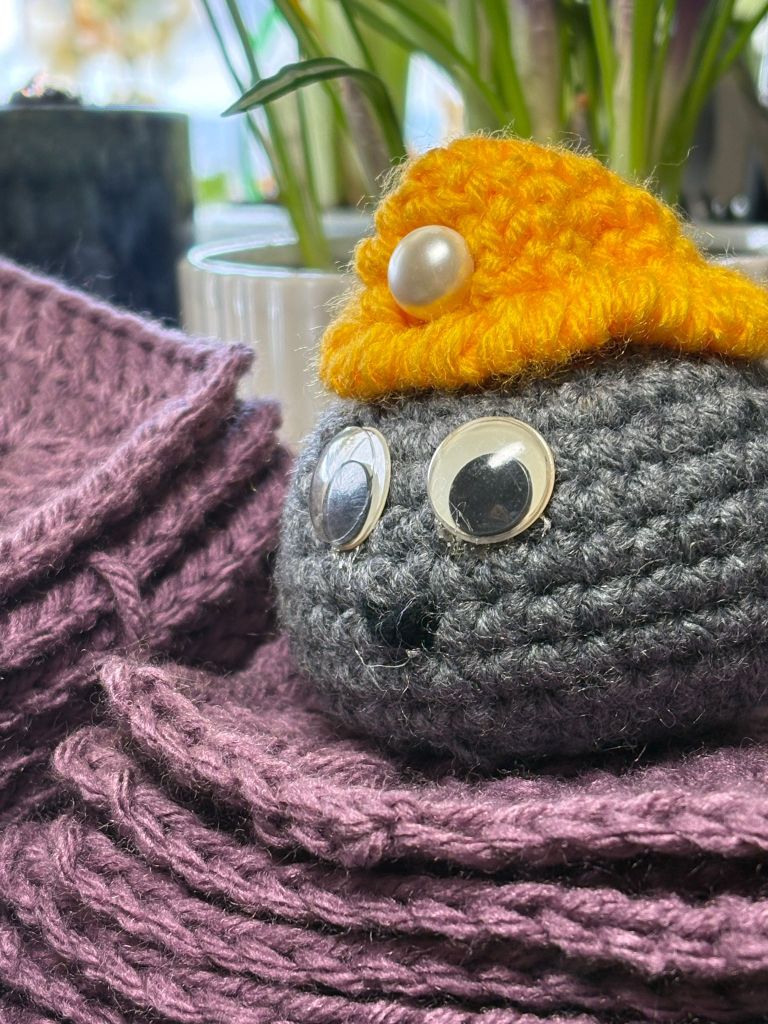
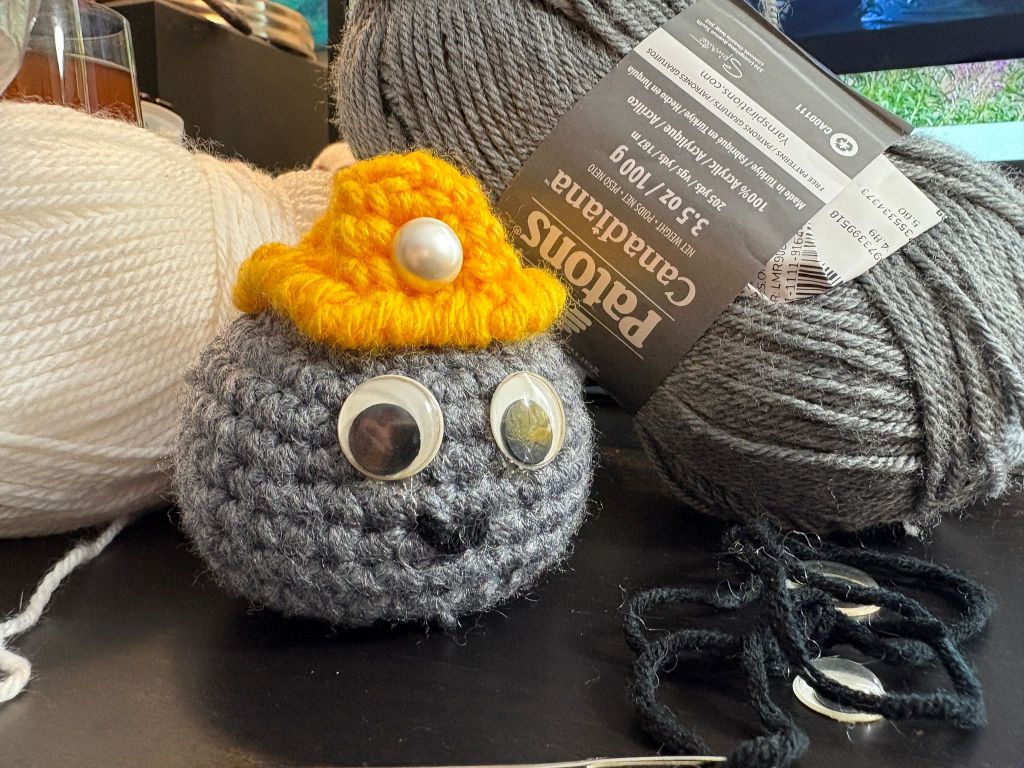
The US Administration rolled out a new mascot, “Coalie”, a cartoon mascot designed to make climate-killing coal fun and friendly again. Coalie came up in classroom discussions multiple times throughout the semester, particularly around the concept of slow violence and the unequal distribution of pollution.
My version of Coalie is made using Supergurumi’s shapes pattern for sphere (body) and dome (hat). Reference image from Mother Jones.
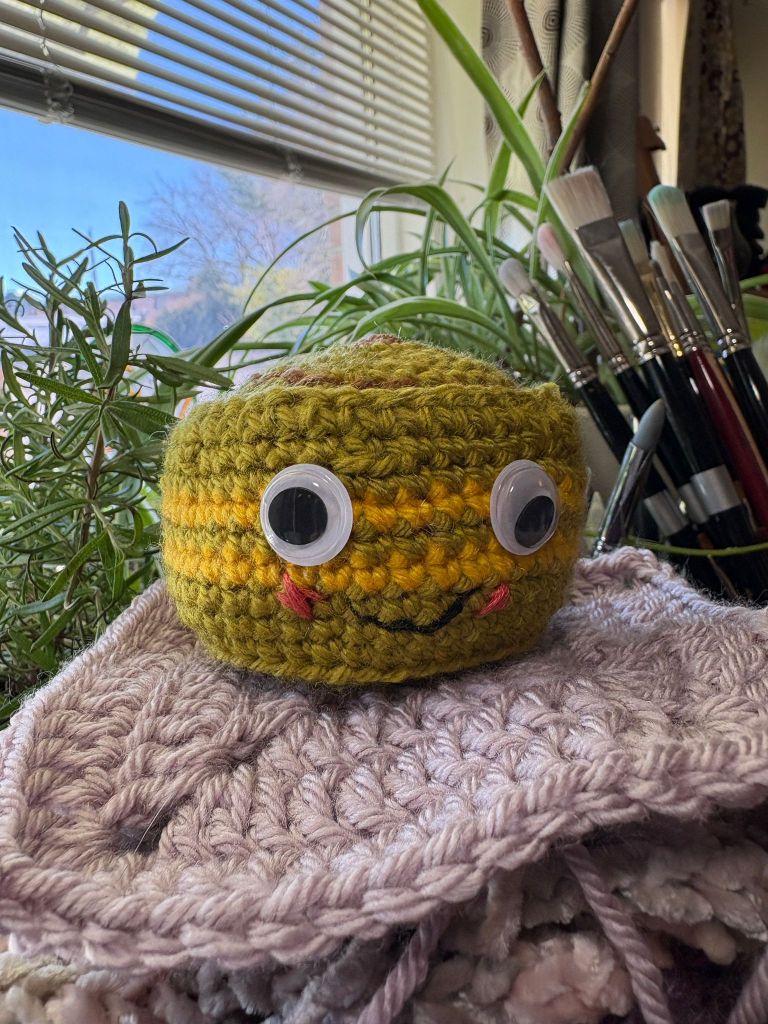
Mushie
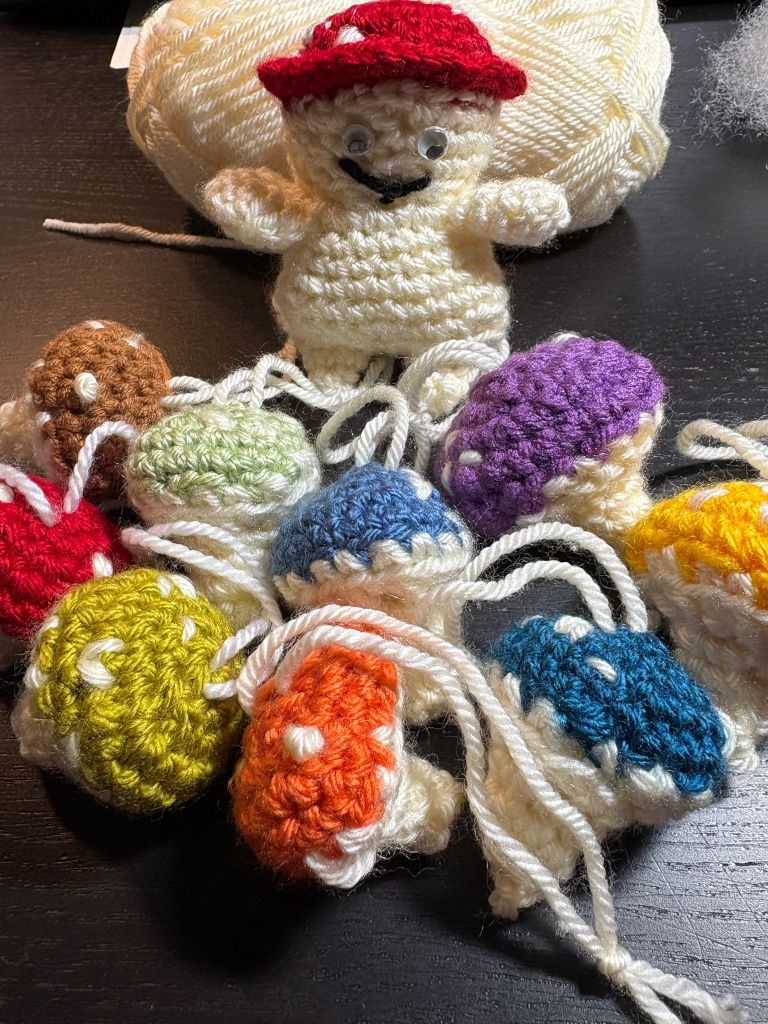
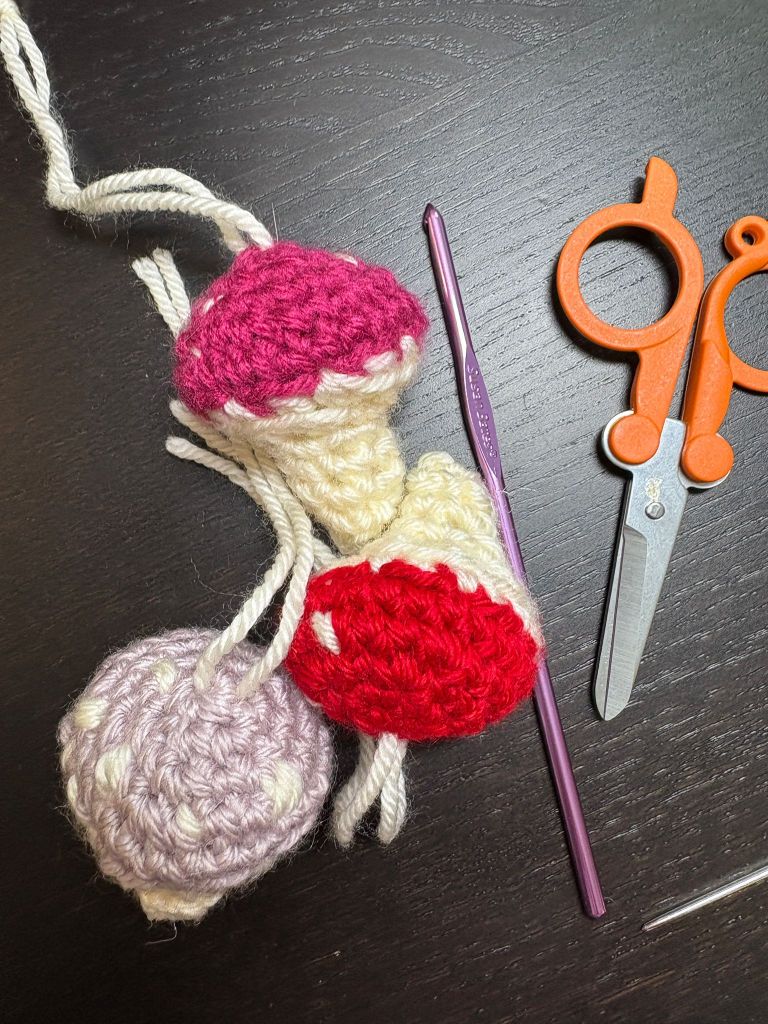
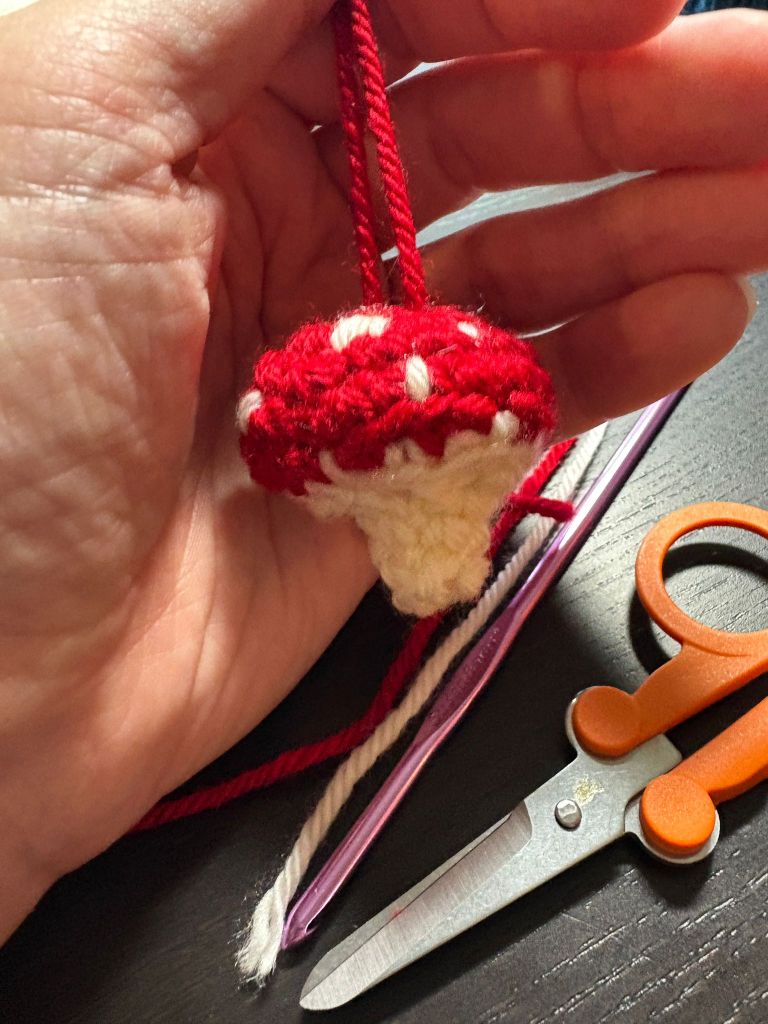
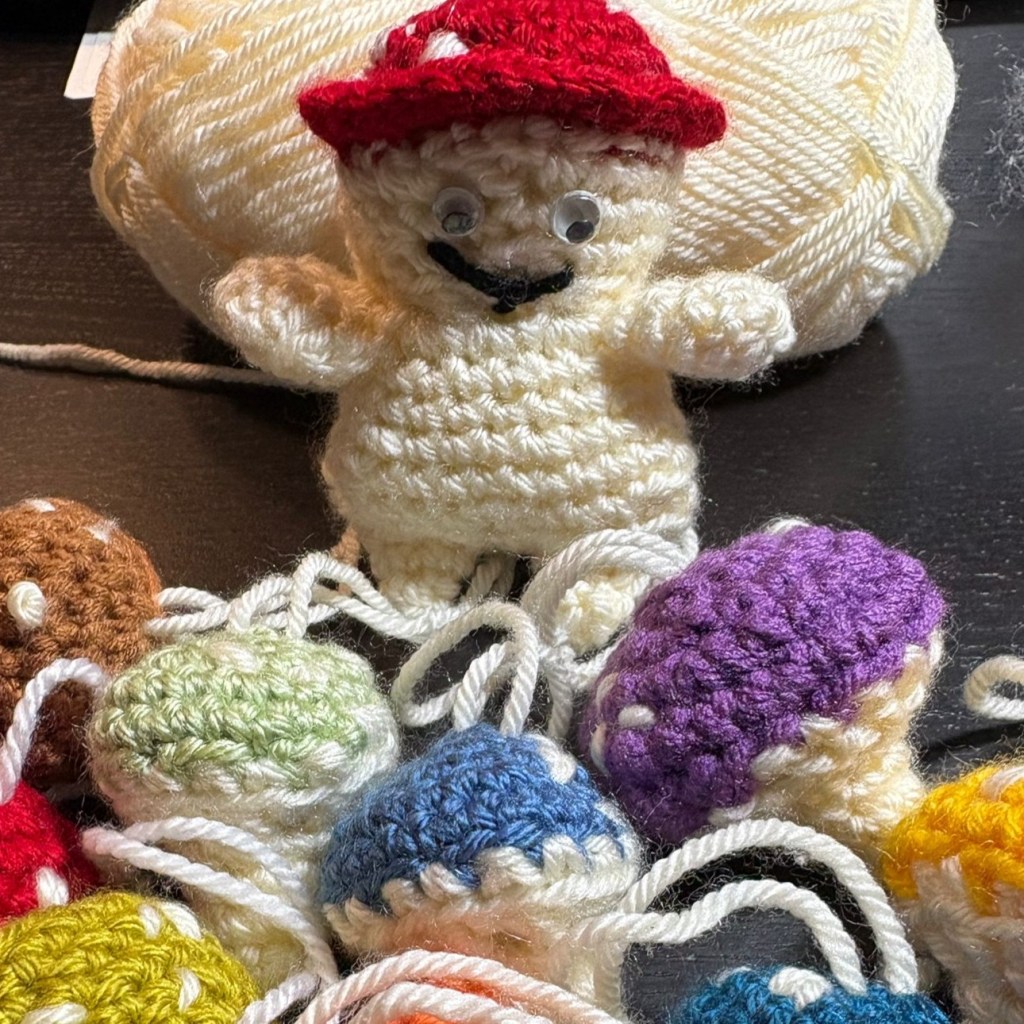
Our penultimate reading for the course was The Mushroom At The End of the World by Anna Lowenhaupt Tsing. This award-winning book uses the matsutake mushroom as a vehicle of exploration to question and reconceptualize human understanding of and involvement in the more-than-human world. An excellent read!
As a podcaster, I found Tsing’s approach to story telling really interesting. There isn’t a narrative arc, per se, like we read in The Tiger. Rather, in talking about assemblages, she creates a book that is itself an assemblage. There is no real “start” or “end,” but an organic exploration of society, culture, the environment, and global capitalism through the matsutake.
Mushie is made from a free pattern by on MiaStitchStudio on Instagram. Mini mushrooms are also a free pattern from the Caffeinated Snail. Please note that all faults are due to my beginner skill, not the patterns!
Landminey
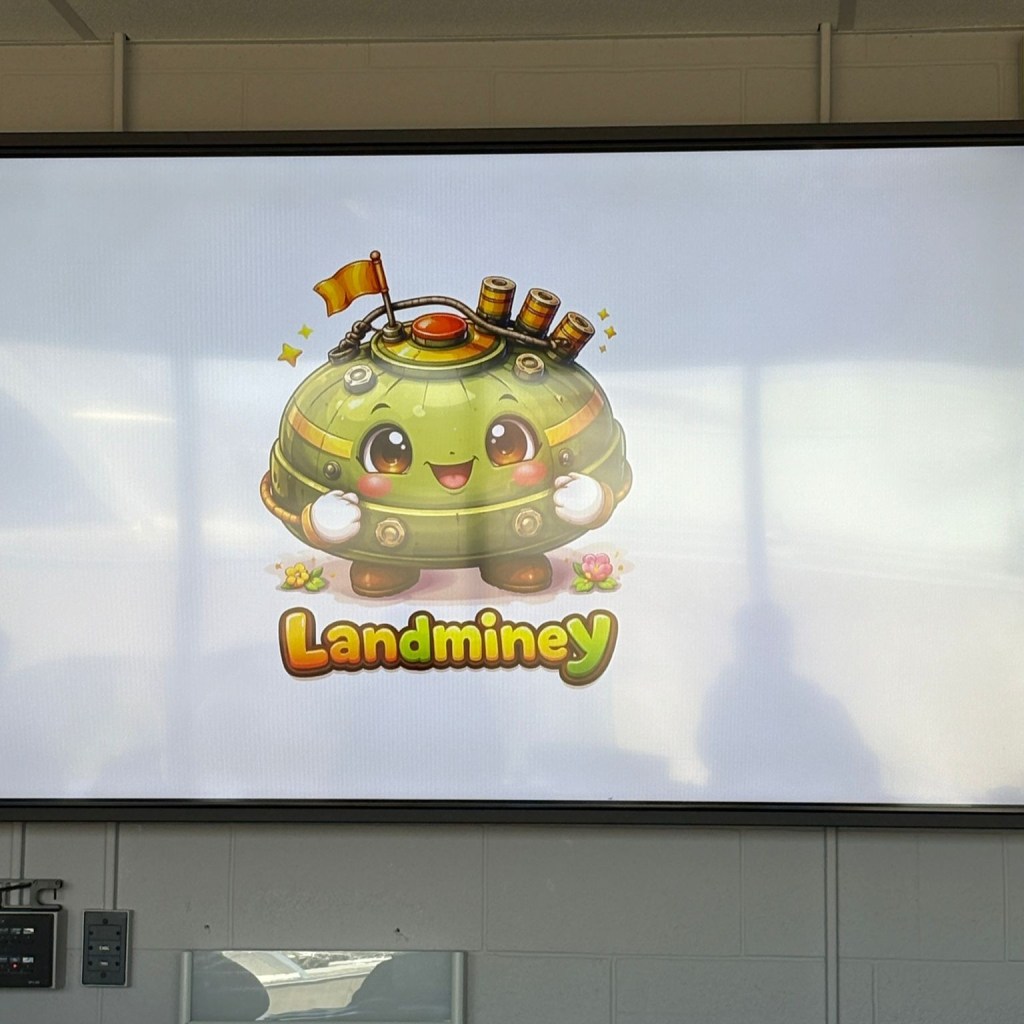
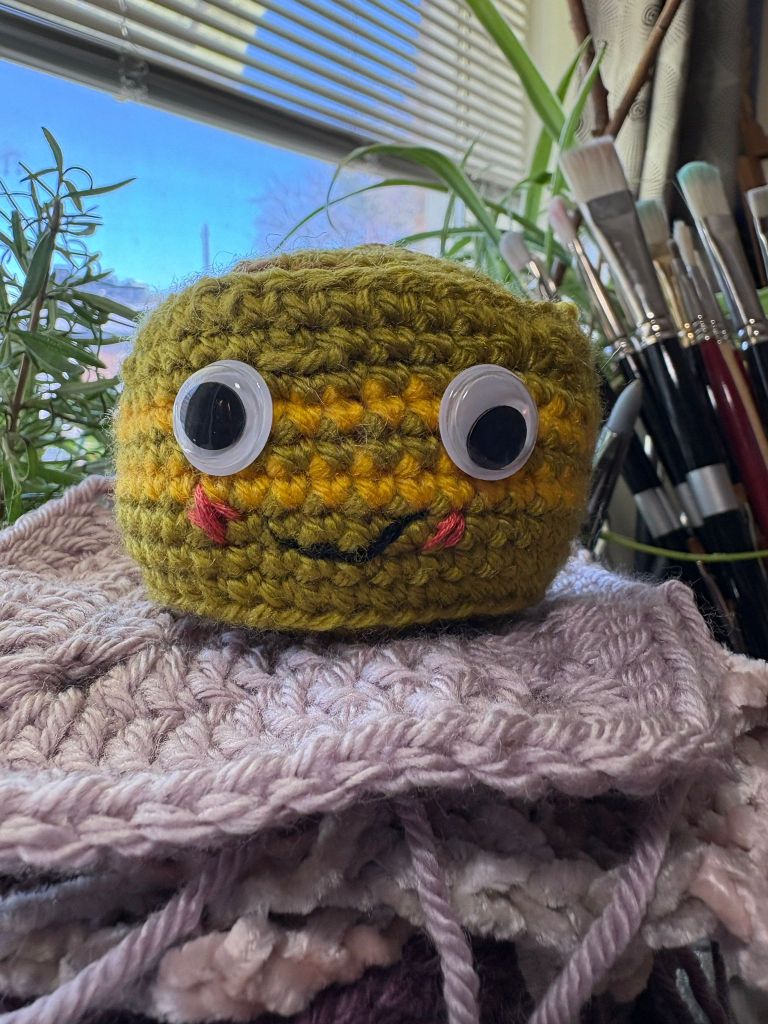
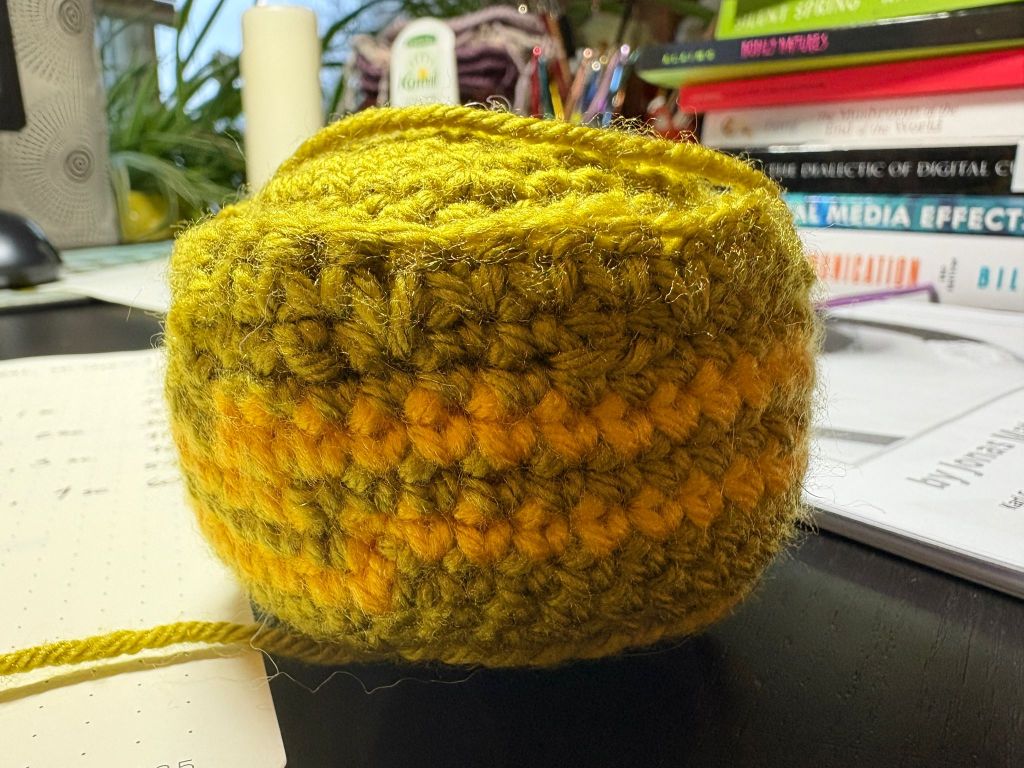
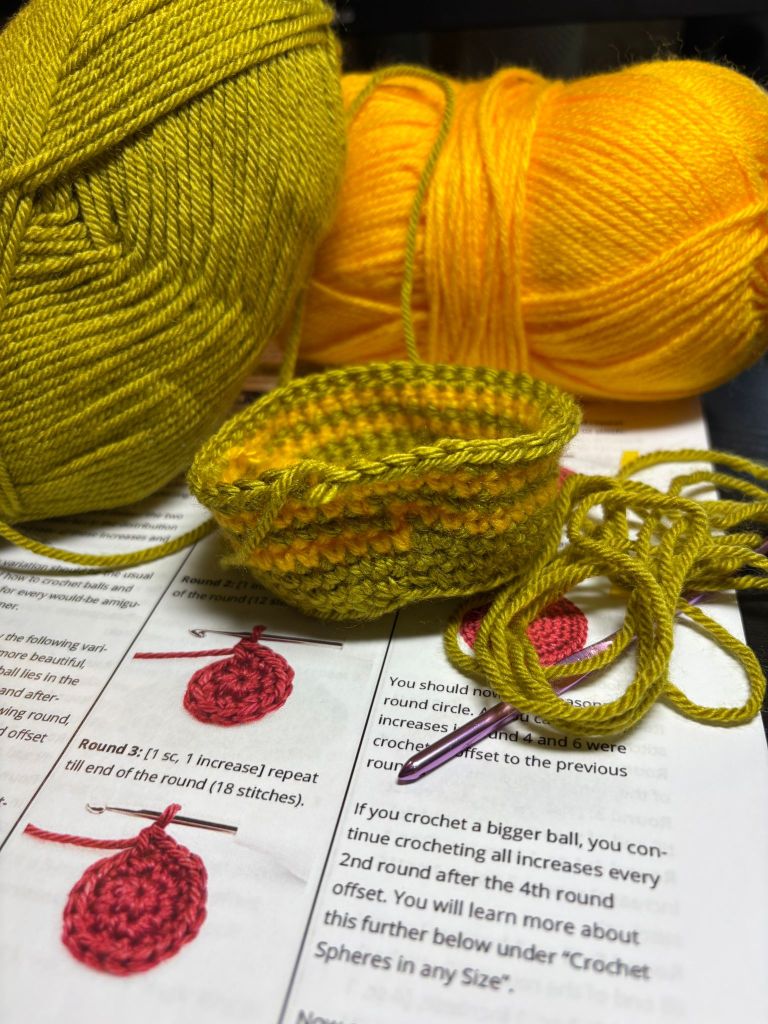
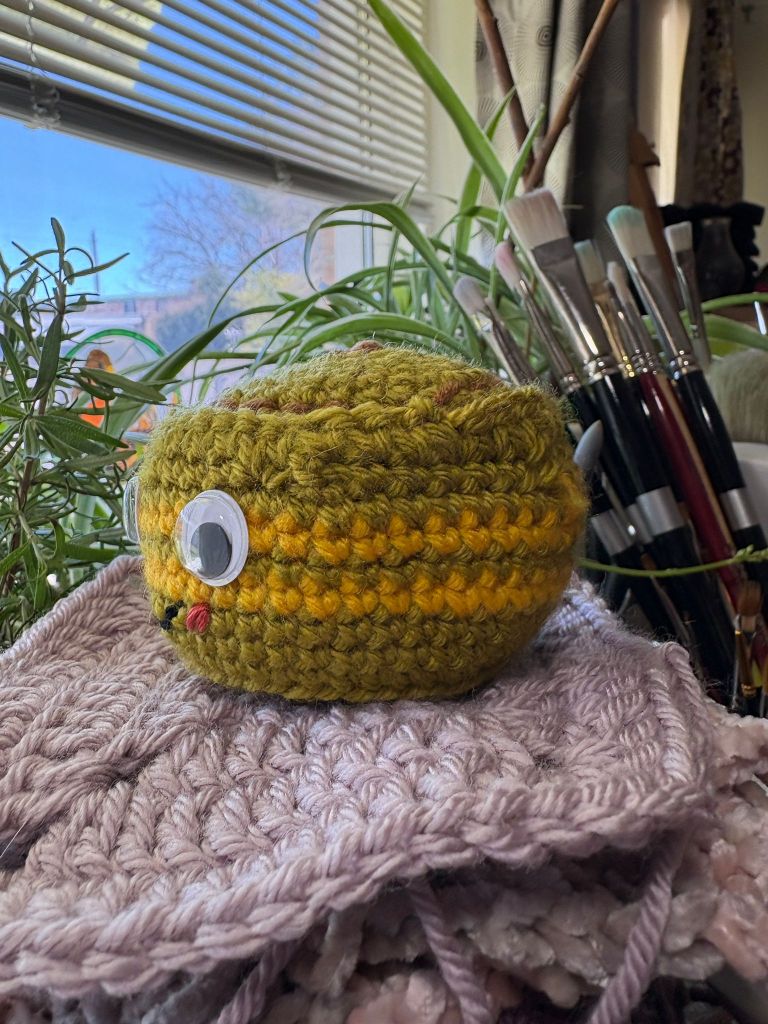
One of my classmates made the astute observation that having a cute and cuddly coal mascot is akin to have a cute and cuddly landmine mascot. Someone whipped up an image of a cartoon landmine and, well, I took inspiration! Landminey is the figure that really gave me the idea to put together this little collection that questions human and non-human interactions and how we talk about what lives are valued. (For the academics in the crowd, this is Judith Butler’s Frames of War: When is Life Grievable, which has been very influential in my own work this year.) It feels perverse to make a cute and cuddly landmine, as these cruel weapons are infamous for killing children and civilians even long after a conflict is over.
Around this time, my online spaces were filled with discussion of the “Melt the ICE” hat movement and whether art/textiles is political (it is!) whether it “counts” as activism. So creating Landminey contributed to my thoughts about activism and “subversive” textile work like knitting, crochet, needlepoint, etc.
The process of making it felt deeply uncomfortable. Amigurumi are cute toys aimed at our childhood sense of wonder and delight in the world. Their cuteness taps into the human evolutionary urge to take care of cute baby things. As one of my first designs, I am happy to share the PDF pattern, but at the same time it feels really wrong, too. You know?
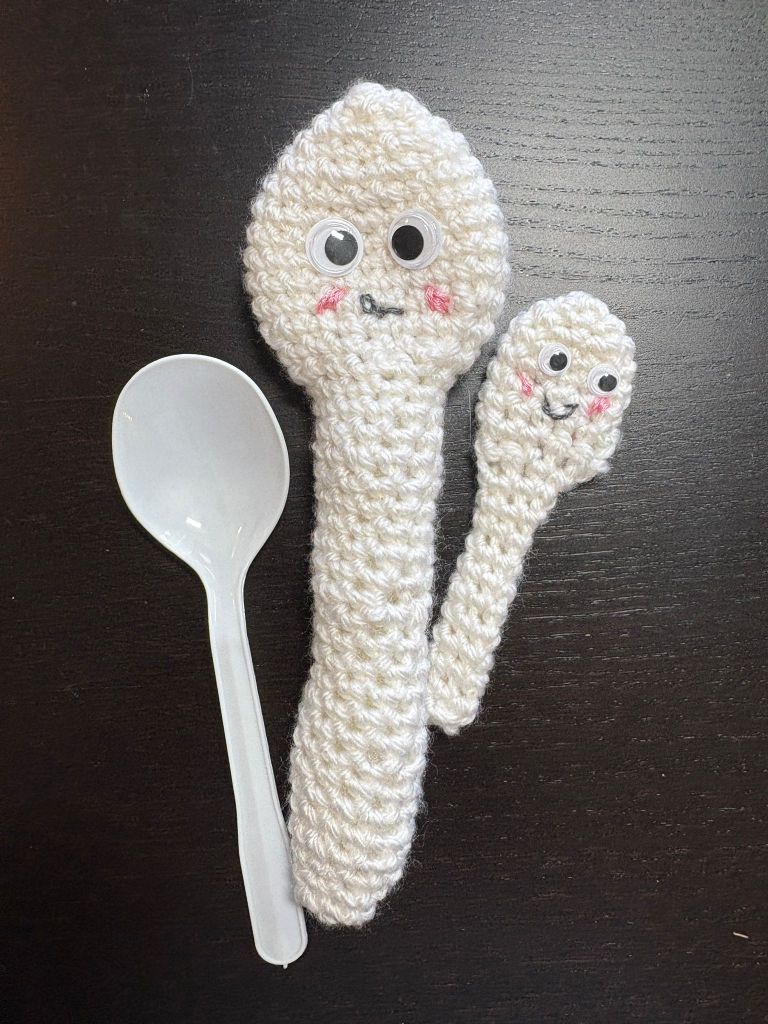
Spoonie
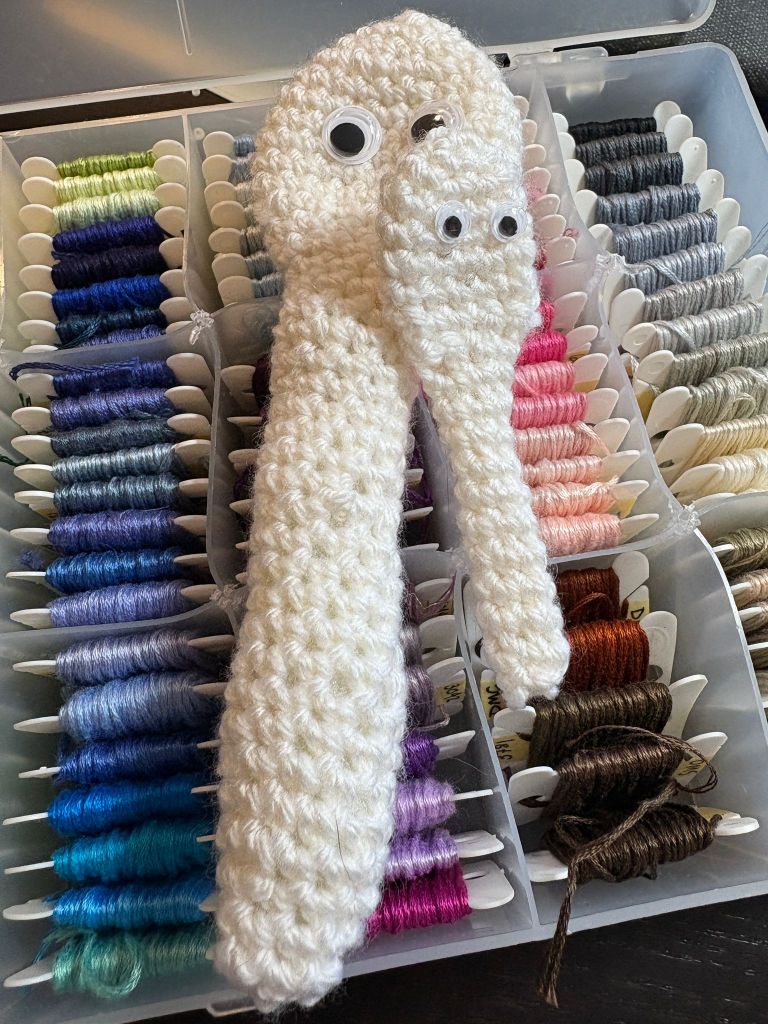
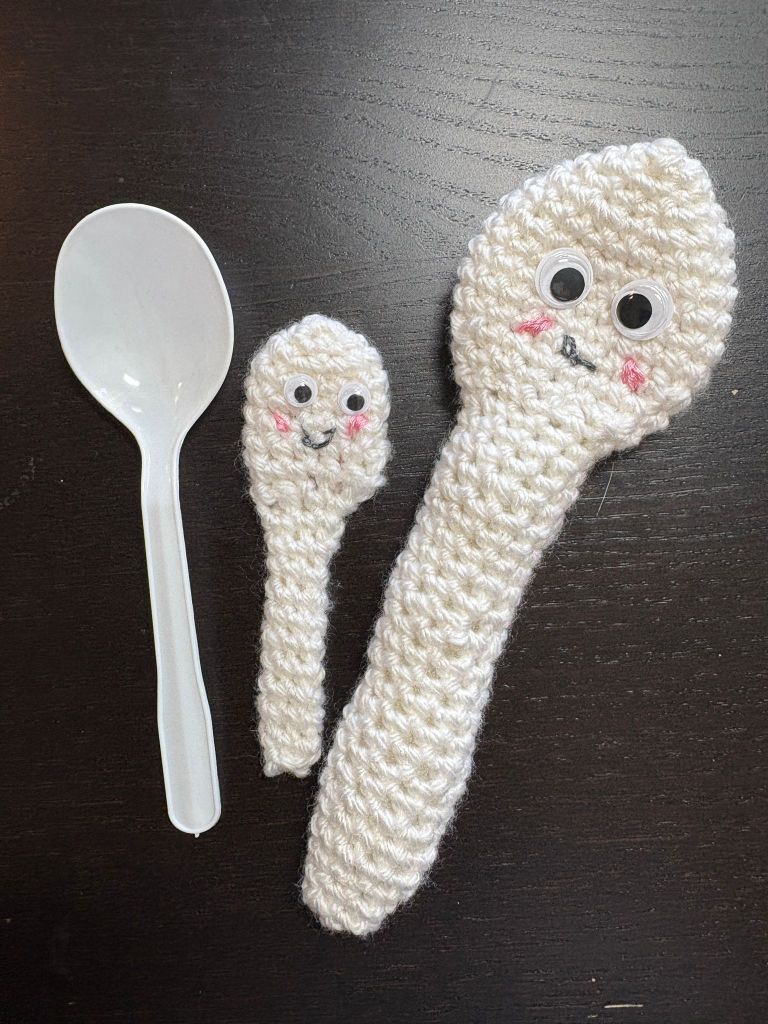
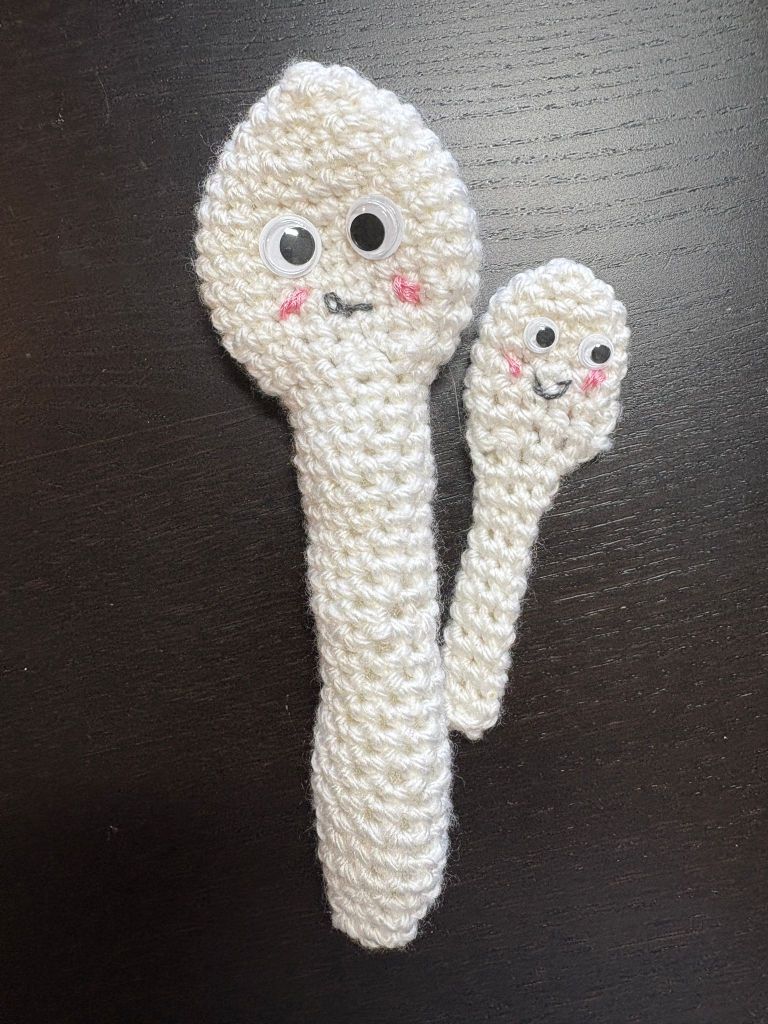
Stacy Alaimo’s book Bodily Natures generated lots of discussion around how materials have agency and how they interact with human bodies. This brought us to discussion about microplastics and the 2025 reports on how the concentration of microplastics in the human body has dramatically increased over the past decade. Some reports suggest that the adult human brain may have the equivalent amount of plastic as a spoon, which, of course, led to this amigurumi. (Ironically, I use acrylic yarn which is made of plastic, so it is really a plastic spoon. Just not very useful with a bowl of hot soup!)
Plastic spoon made from a free pattern by StringyDingDing.
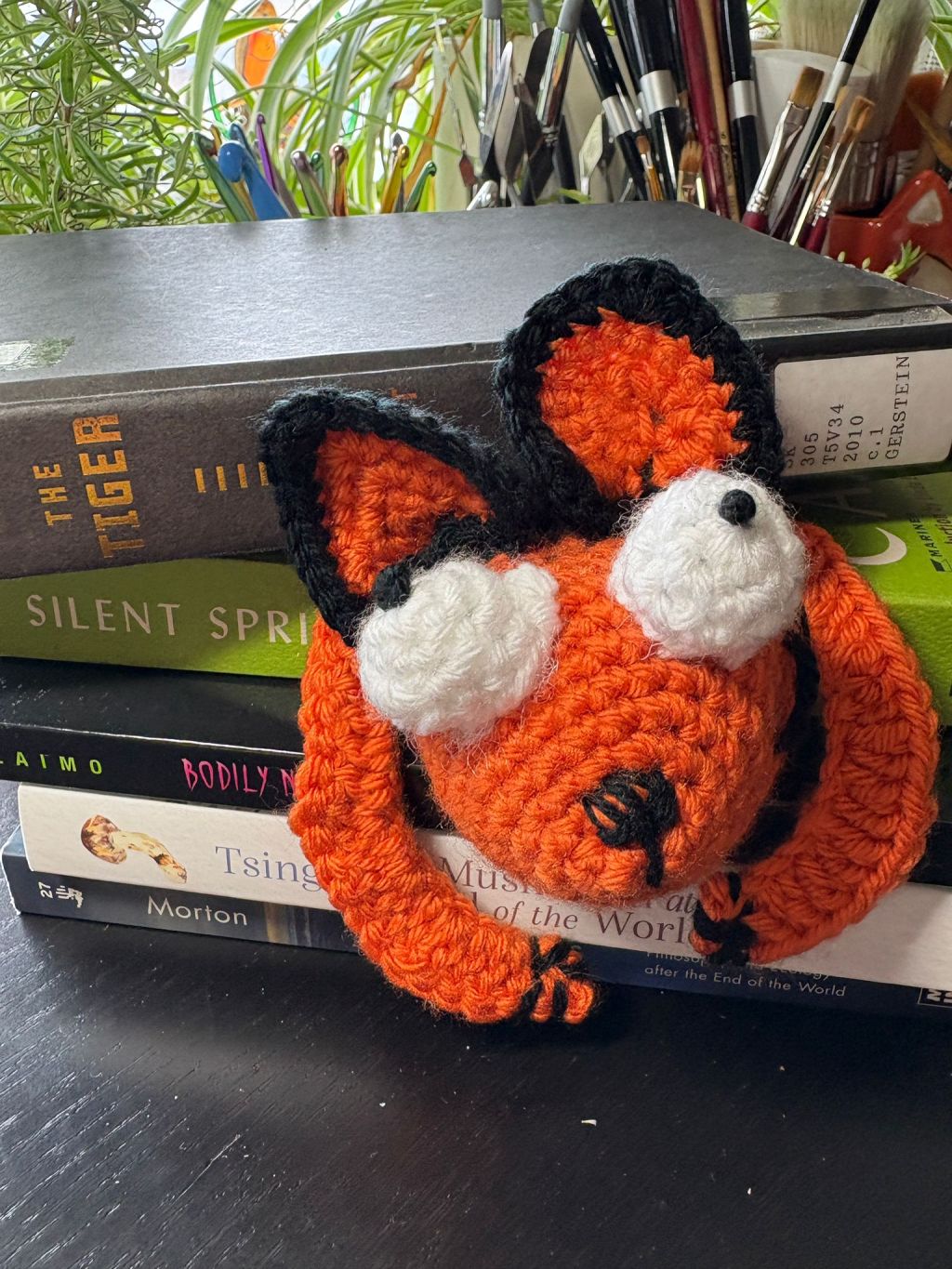
Tiger
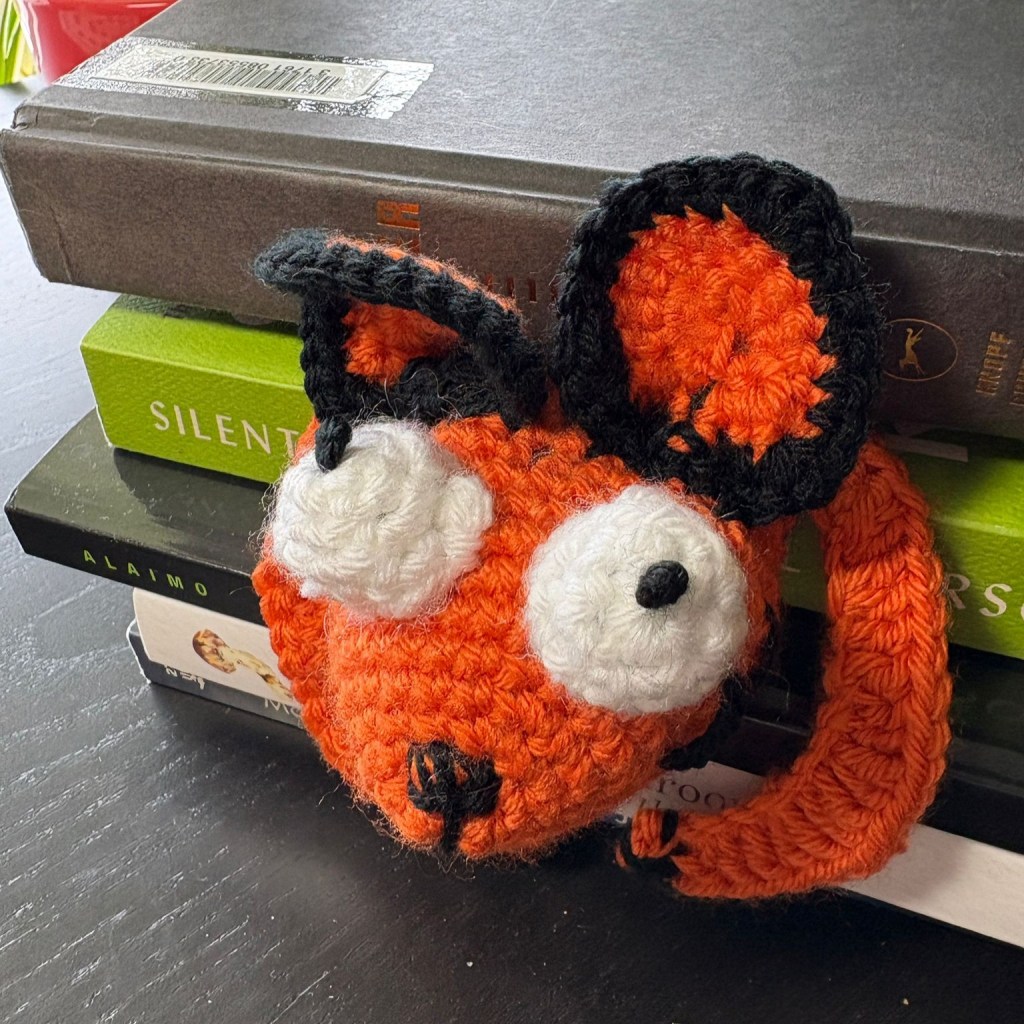
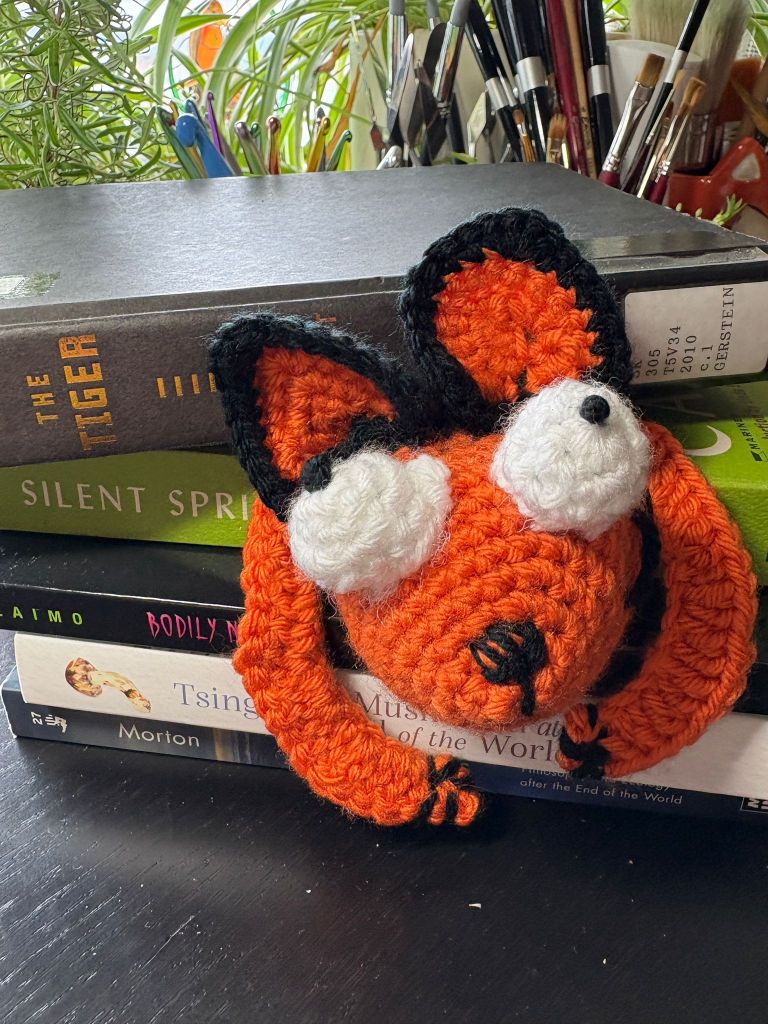
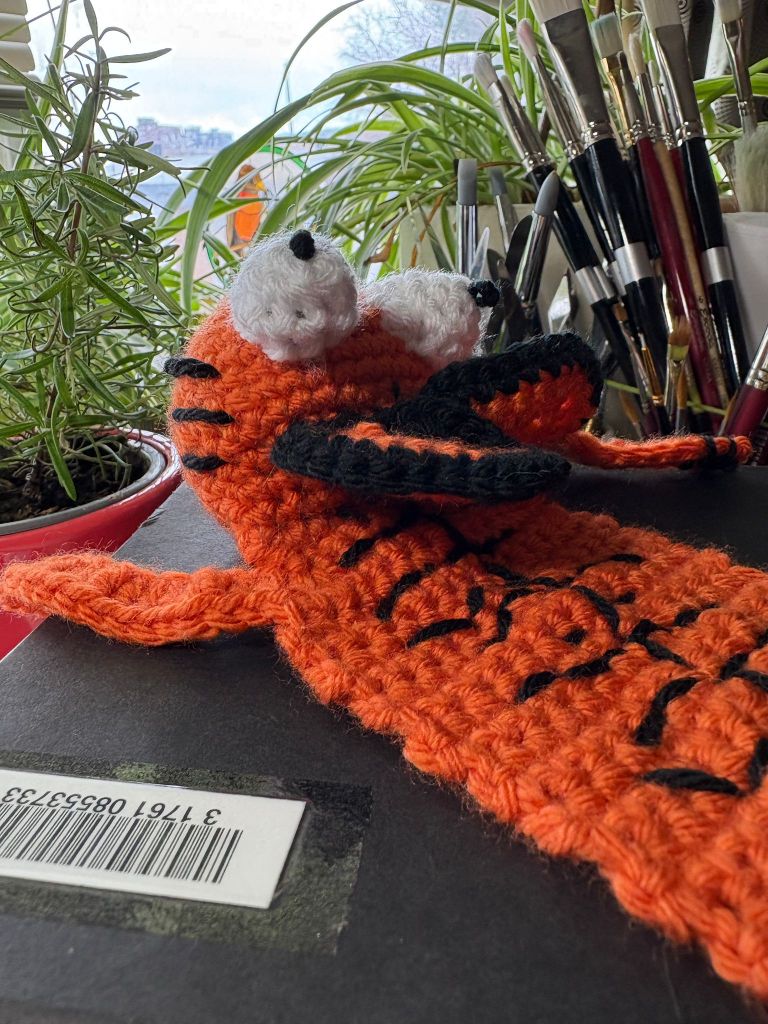
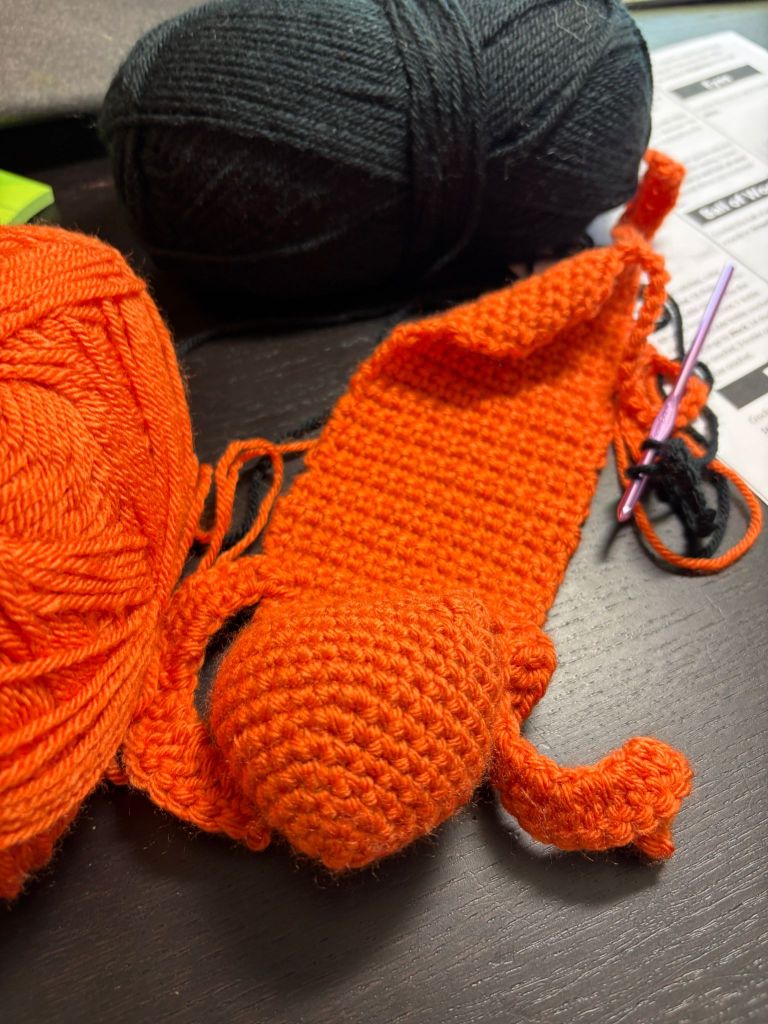
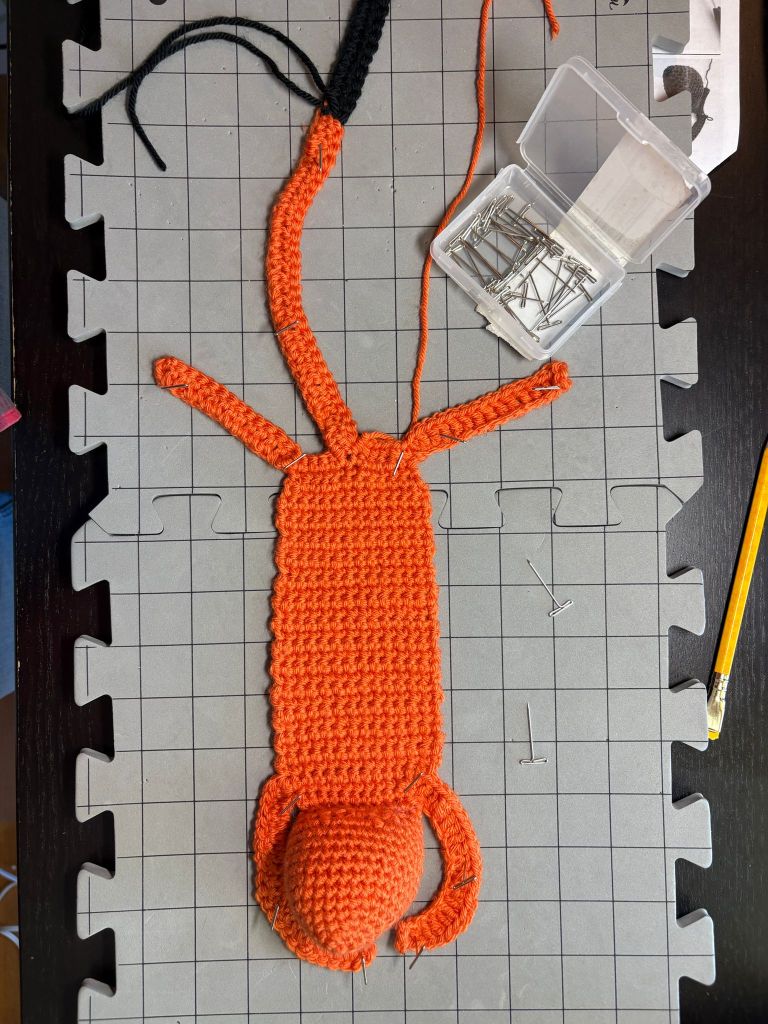
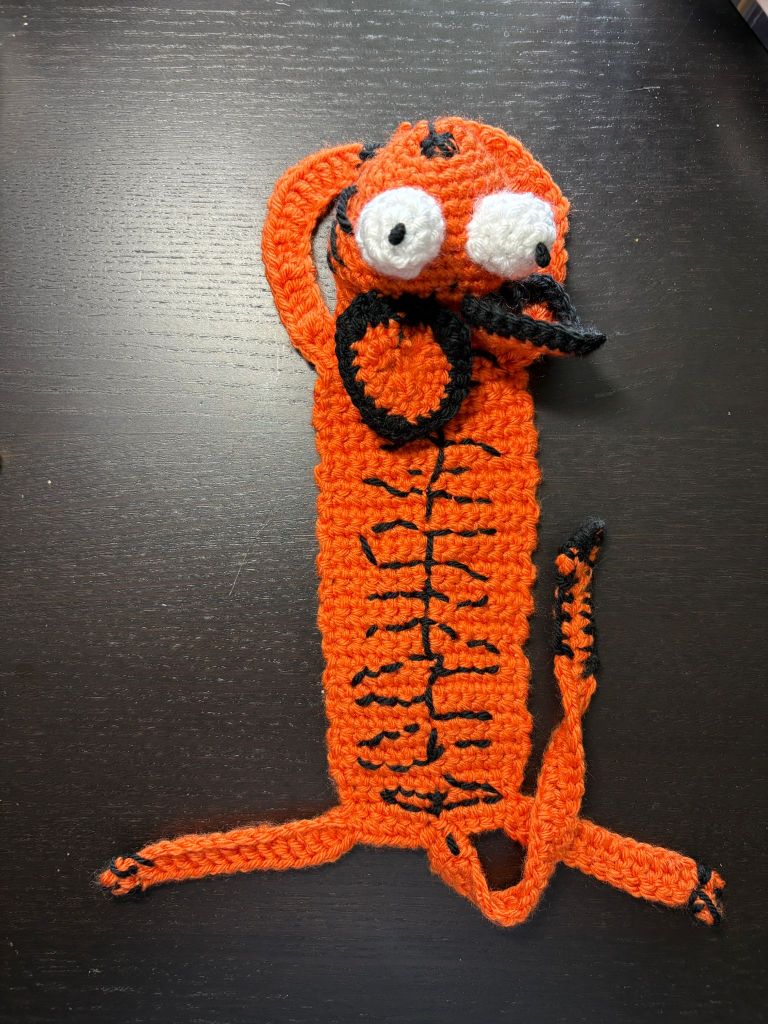
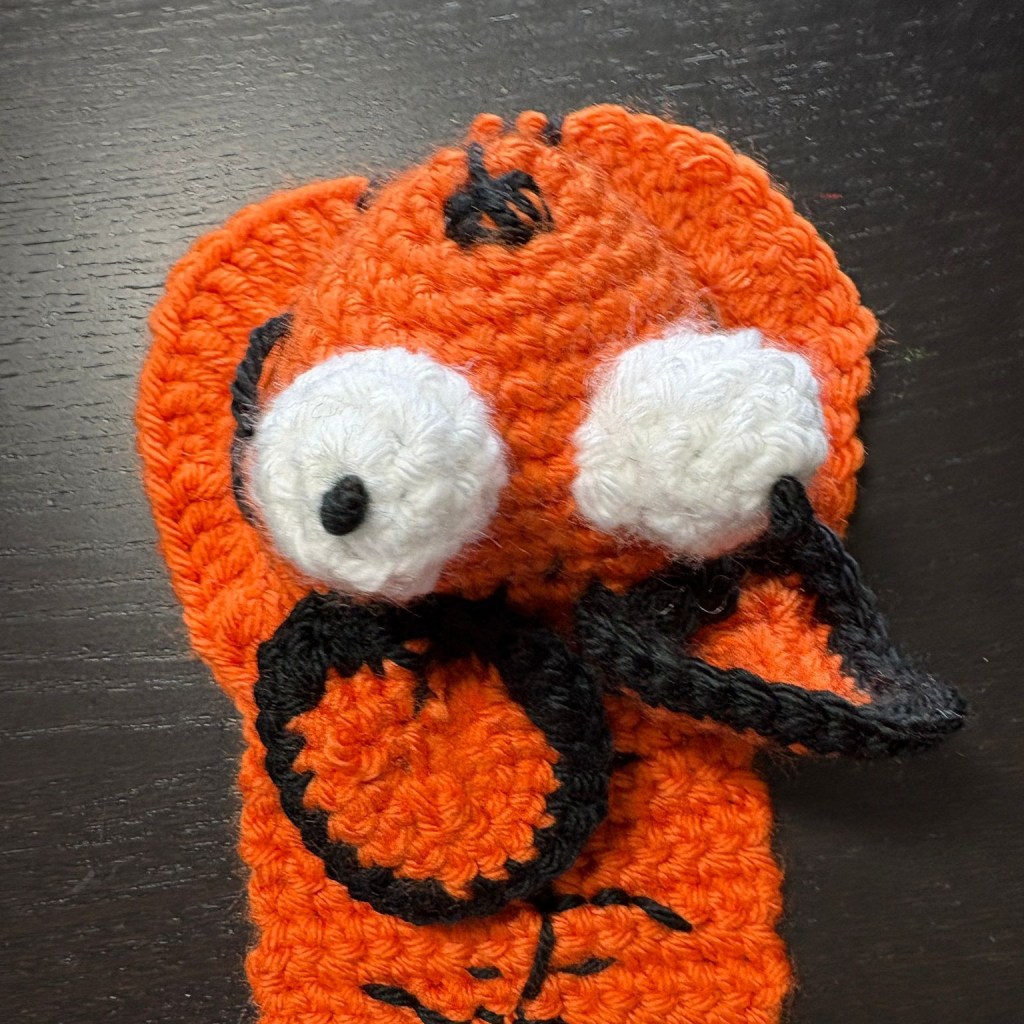
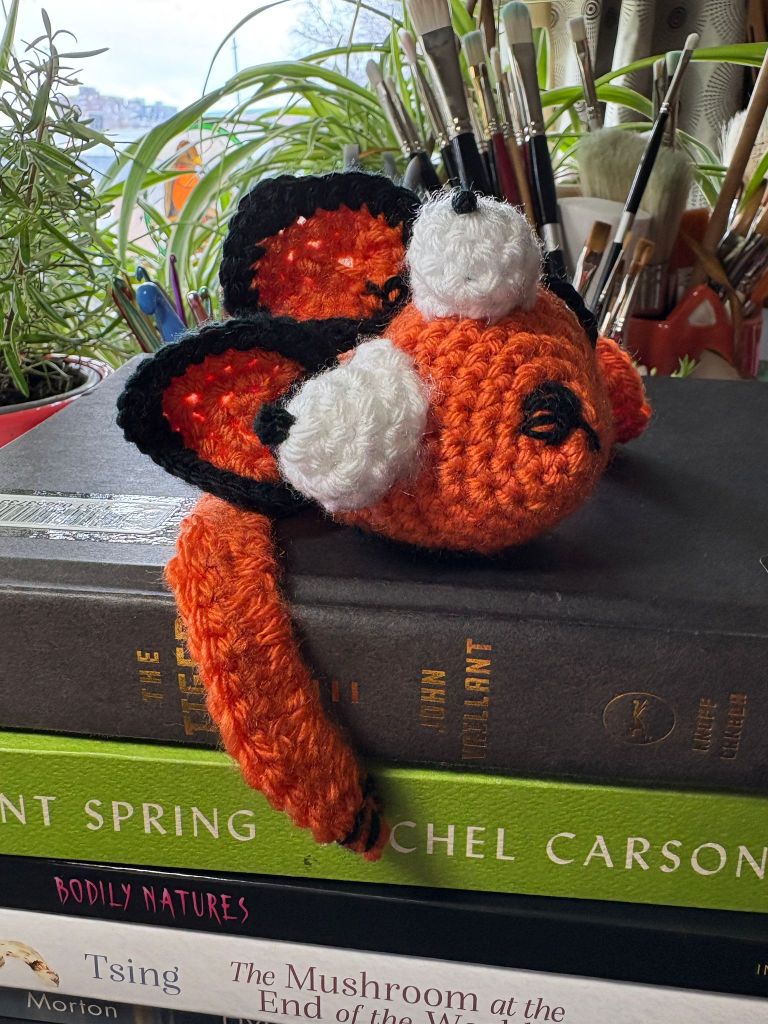
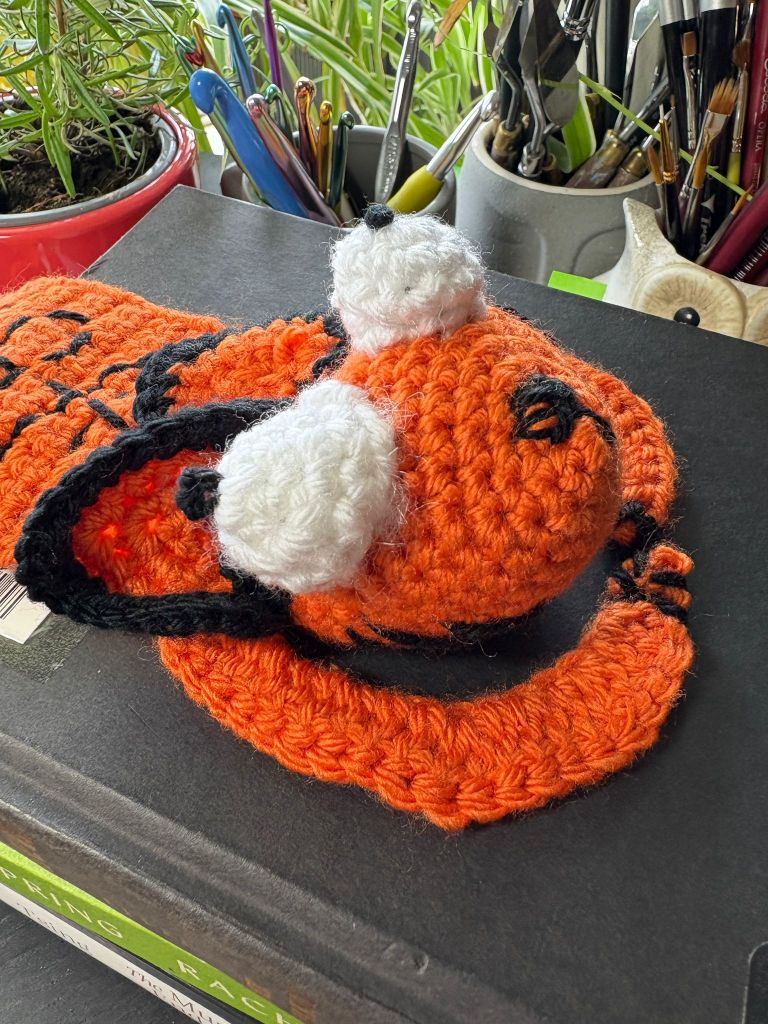
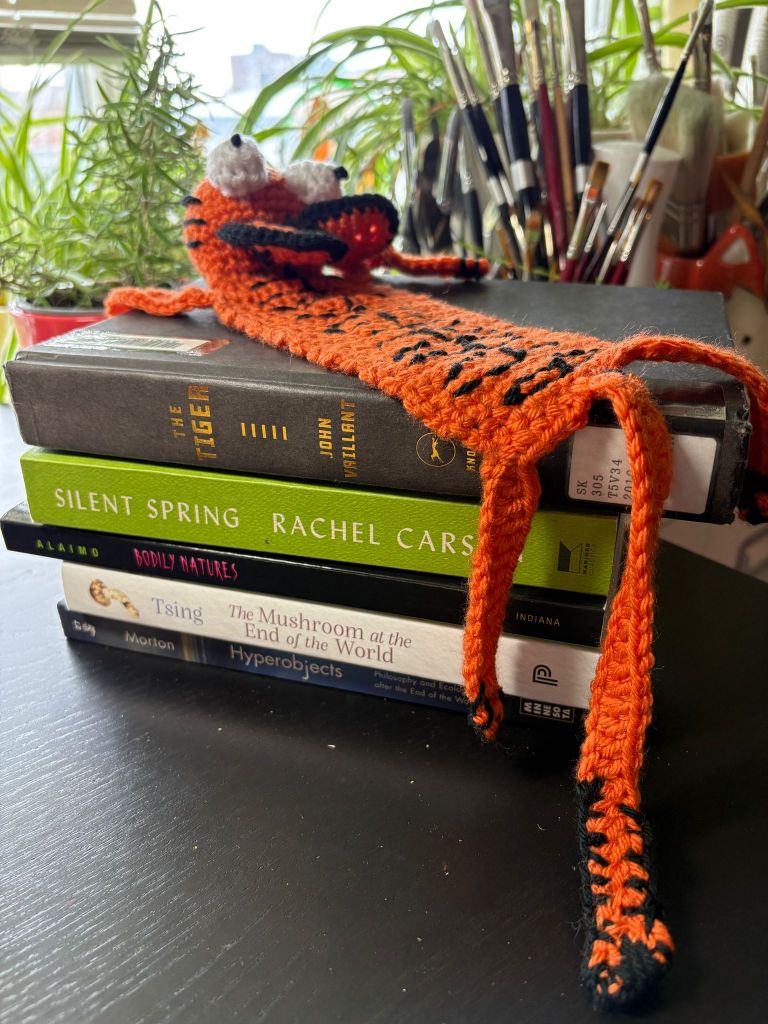
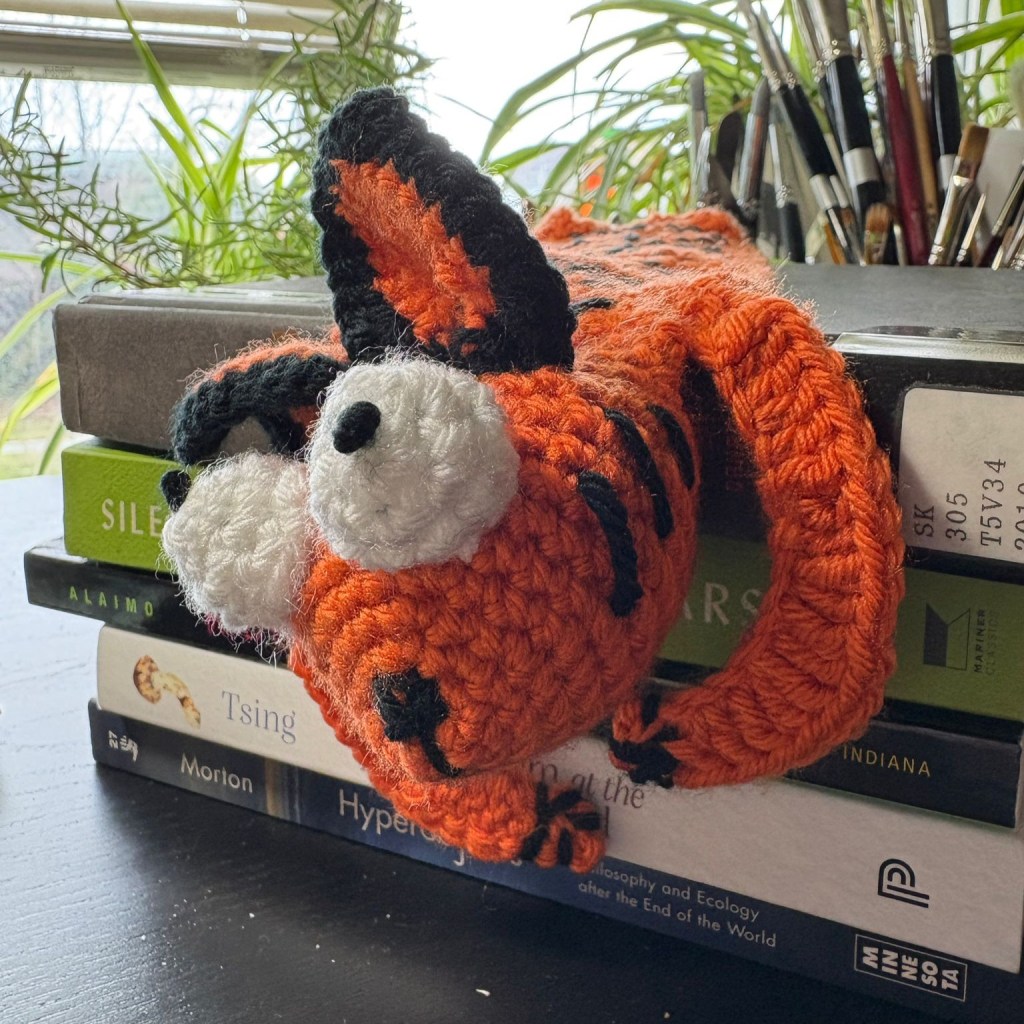
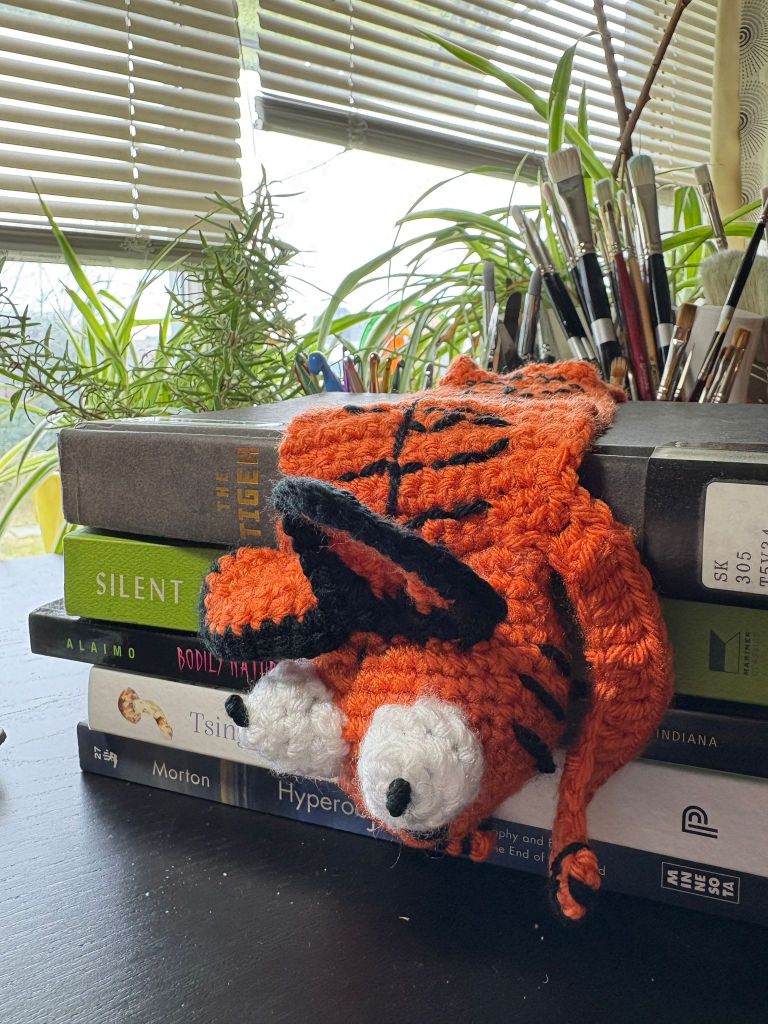
I had so much fun creating this tiger bookmark! The Tiger by John Vaillant was one of the first texts we read in the course and it was gripping. I read it as a masterclass in how to tell an engaging story while weaving in all the context, such as history, politics, and geography, necessary to really understanding one small story. The themes in this book– humans in conflict with nature, the permeability of boundaries between species, spaces, and bodies, and the interconnection of human and non-human animals came up repeatedly throughout the rest of the course.
This tiger is my own adaptation of Supergurumi’s Cat Bookmark pattern. I did it in orange, and put the black markings on with a needle afterwards. If I were to try it again, I would probably attempt surface crochet (which was a technique I have since learned about) instead of sewing.
*Spoiler Alert* In the book, the tiger winds up killed and stuffed in a museum. So I felt the flattened “dead” look of the tiger bookmark was particularly appropriate.
Some day, perhaps, I will come up with some creations for the other readings we did. What would it look like to crochet a hyperobject? Is it right to turn the haunting stories of Chernobyl into cute amigurumi? What would radiation or climate change look like? How do you capture the interconnection of people, land, and non-human species in a single crochet object?


 Project PhDcast
Leave a comment